Craft Land: Sandbox World
- 3.2
- Rating
- 1.00M
- Installs
- Free
- Price
 Analysis by App-foxy
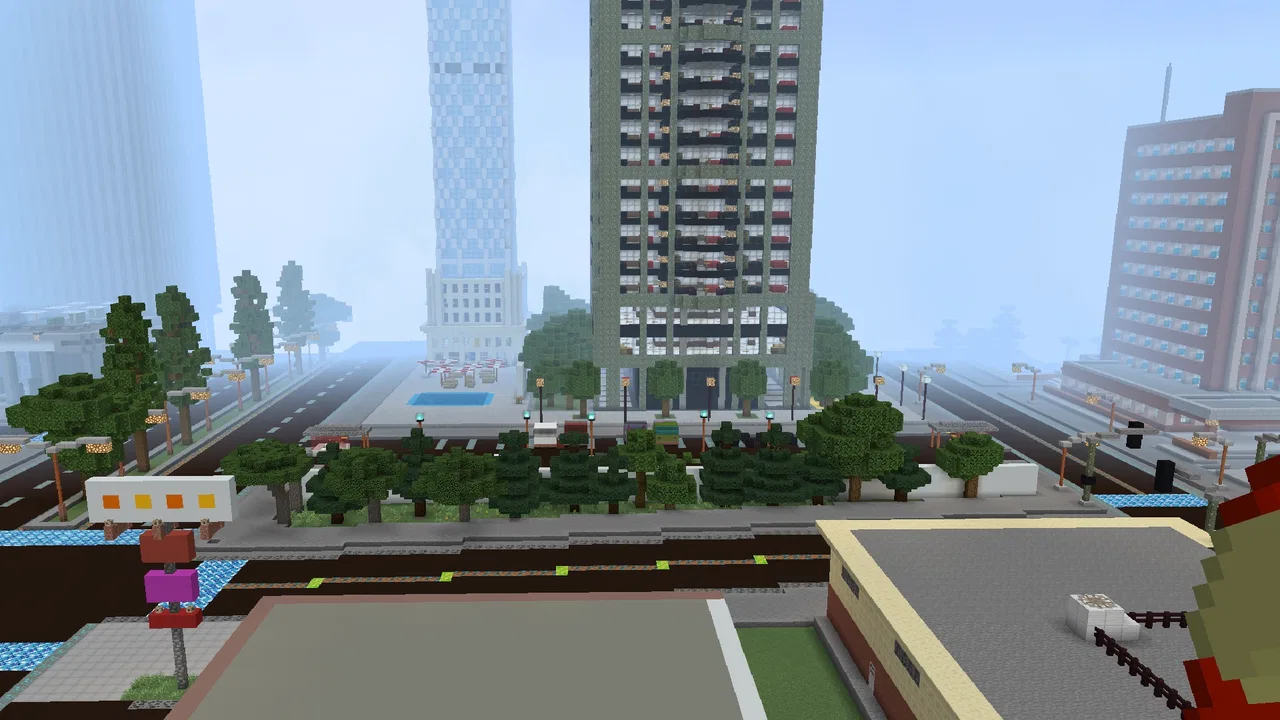
What interested me most about Craft Land: Sandbox World is the freedom promised by its central idea: a block-based space where I can build, explore, and create without being pushed toward one fixed objective. That sounds familiar if you have played other sandbox games, but the real appeal is not the wording itself. It is the change in pace. Instead of chasing a score or completing a strict sequence of missions, I can treat the game as a small creative workspace, a quiet exploration toy, or a place to experiment with simple constructions.
Craft Land: Sandbox World is a simulation game from Craftopia Games, available for free and suitable for Everyone. It has reached over one hundred thousand installs, which suggests that the basic concept has already attracted a meaningful audience. The current release is version 3001-a, and it runs on Android 7.0 or later. Those details make it approachable for people using older devices, although the experience will still depend on the phone or tablet itself.
I would not approach this as a story-driven adventure with a carefully directed campaign. Its strongest verified identity is the sandbox itself: the ability to shape a block world around your own ideas. That makes it particularly interesting for players who enjoy making things more than being told what to do. It also creates the main question you should ask before installing it: do you enjoy setting your own goals, or do you need constant objectives to keep a game moving?
You May Also Like

 Blood Strike: 2.5 Anniversary
Blood Strike’s Loadouts Turn Every Drop Into a Tactical Gamble
A close look at Blood Strike’s custom loadouts: how fast access to signature weapons reshapes its battle royale rhythm, rewards preparation, and narrows the gap between fights.

 Pandora - Music & Podcasts
Pandora’s Music Is Easy to Start, but Harder to Recover
Pandora’s strength is its low-effort path from a seed to a station. Its weak spot is how much confidence it asks you to place in connection, setup, and quiet recovery.

 8 Ball Pool
 Is Built on Rivalries, Rematches, and Routine
A close look at the rivalries, rematches, shared routines, and unanswered safety questions that turn a quick pool match into a persistent mobile community.

 Samsung Music
’s Quiet Strength Is Playing What You Already Own
Its reach comes less from spectacle than from dependable access to a personal library. That simplicity is both the app’s strongest retention engine and its ceiling.

 AccuWeather: Weather Radar
AccuWeather Review: A Quick, Clear Forecast for Everyday Decisions
For everyday plans, the best forecast is the one you can understand quickly. AccuWeather makes rain timing, radar, and local conditions easy to act on, with a few trade-offs.

 Hill Climb Racing
Why Hill Climb Racing Still Turns Crashes Into One More Run
A tiny car, a bumpy hill and one more upgrade: Hill Climb Racing keeps resurfacing because its simple chaos makes every near-miss feel personal.
More From Our News Desk
View All News


Why the open building capability matters
The most important capability here is unrestricted creation. In practical terms, a sandbox block world gives me room to decide what counts as progress. A small shelter can be enough for one session. A larger settlement can become a longer project. Even simply walking around and changing the landscape can feel worthwhile if I enjoy seeing a blank space become something recognizable.
That freedom has a different effect from the usual structure of simulation games. In a management simulator, the game normally measures success through resources, efficiency, upgrades, or targets. In a construction-focused sandbox, the reward is more personal. I may be satisfied because a path looks better, a building has the shape I wanted, or a rough idea finally works in the world. The game does not need to declare that I succeeded for the result to feel meaningful.
For me, this makes the title easiest to understand as a digital sketchbook made from blocks. I can test a layout, abandon it, and begin again without treating every mistake as a failure. That low-pressure quality is useful after a busy day, especially when I want something interactive but do not want to follow a complicated plot or compete against other players.
There is also a useful distinction between freedom and endless content. An open world can give me space, but space alone does not guarantee that I will remain interested. The value depends on whether I can invent projects that hold my attention. Someone who likes planning rooms, arranging structures, or experimenting with shapes may find plenty to do. Someone who expects the game to continually introduce new challenges may feel that the openness becomes a lack of direction.
Turning a blank world into a personal project
I get the best results when I enter with a small intention instead of hoping the game will provide motivation automatically. Rather than thinking, “I will build everything,” I might decide to make a compact home with a clear entrance, a storage area, and a path leading away from it. That limited goal gives the session a beginning and an ending while preserving the creative freedom that defines the game.
A useful habit is to build in layers. I start with the shape that matters most, such as the outline of a house or a bridge. After that, I adjust the surroundings so the construction feels connected to the world. Finally, I add small visual decisions, like varying the height of walls or leaving open space around the main structure. This approach prevents me from spending too long decorating a design that does not work at a larger scale.
Another practical tip is to treat exploration as research for building. Walking through the world can help me decide whether I want a compact settlement, a remote hideaway, or a route that links several landmarks I create myself. Even when exploration is not the main activity, it can supply the context that makes a construction project feel less like an isolated object placed on a flat surface.
I also find it helpful to stop before a project becomes exhausting. Sandbox games can make a person feel that there is always one more wall, room, or detail to finish. Saving a clear next step for the following session gives me a reason to return without turning the game into a chore. The best rhythm is often short planning, focused building, and a deliberate pause.
How the freedom feels during ordinary play
In use, the open format changes the way I judge a session. I do not need to complete a mission to feel that the time was worthwhile. A session can be successful if I discover a good location, improve the shape of a building, or solve a construction problem that initially looked awkward. That makes the game flexible for different moods.
On a quick break, I can make one small change and leave. With more time, I can plan a larger area and think about how separate structures should relate to one another. This is one reason the game may work well on a phone: the basic idea does not require me to commit to a long narrative sequence before I can enjoy it. I can create at my own pace.
The same flexibility can make the first session feel less immediately rewarding than a conventional game. A racing game gives me a track. A puzzle game gives me a problem. A story game gives me a next scene. Here, I may need to supply the question myself. My first useful question is usually not “What should I unlock?” but “What do I want this place to become?”
That change in mindset is important for new players. If I install it expecting a guided tutorial to explain a complete progression path, I may be disappointed. If I install it expecting a creative environment where I can test ideas, the lack of pressure becomes an advantage. The game works best when I accept that my own plan is part of the gameplay.
A realistic everyday scenario
Imagine having twenty minutes before dinner and wanting a game that does not demand full concentration for a long campaign. I could open Craft Land, return to a partly finished settlement, and focus on one task: connecting the central building to a nearby area with a simple route. I might spend the first few minutes checking the terrain, the next stretch placing the main blocks, and the final minutes correcting the shape so it feels intentional.
That scenario shows the practical strength of the sandbox capability. I am not waiting for a mission to appear or worrying about losing progress in a competitive match. I am using the game as a small creative break. The result may be modest, but it is visible and personal. The next time I return, I already have a clear place to continue.
For a younger player, the same structure can encourage imaginative play, provided the device and play environment are appropriate. The Everyone age rating makes the game broadly accessible, but adults may still want to consider how much unstructured screen time fits their household. The open format can be a strength because it leaves room for invention, yet it can also make it harder to define when a session is finished.
For an adult player, the appeal may be less about pretending to manage a world and more about arranging a calm visual space. I can use a session to decompress, sketch out an idea, or simply make a place that feels orderly. That is a narrower but very real use case, and it is where the game’s central capability has the clearest everyday value.
Where it differs from familiar alternatives
Compared with a conventional life or city simulation, this game appears to place more emphasis on direct creation in a block world than on managing a detailed population, economy, or schedule. That makes it a better fit for me when I want to construct the environment itself rather than supervise systems inside it.
Compared with a directed adventure, the trade is equally clear. I gain control over my destination and projects, but I lose the certainty of a carefully paced journey. Players who enjoy discovering a developer-authored story may prefer an adventure with named characters and explicit objectives. Players who enjoy making their own landmarks may find those same structures restrictive.
It also differs from a competitive building game because the motivation is not necessarily comparison. I can focus on my own layout instead of trying to impress a leaderboard or beat another player’s time. That is appealing when I want creative control without performance pressure. On the other hand, someone who thrives on competition may find a personal sandbox too quiet.
The important comparison is not which format is universally better. It is whether the game’s open building loop matches the way I like to play. Craft Land is the stronger choice when I want a flexible creative space. A more guided alternative is better when I want constant rewards, a defined progression system, or a story that carries me from one activity to the next.
The tradeoffs behind unrestricted creation
The biggest limitation is the same feature that gives the game its identity: freedom can become aimlessness. If I do not bring a project, the world may feel empty rather than liberating. This is not a flaw that can be solved by simply playing longer. It is a question of personal taste. Some players enjoy inventing goals; others need the game to provide them.
There is also a creative planning cost. Building freely sounds simple, but satisfying results usually require decisions about scale, spacing, and sequence. If I place everything without a rough plan, the world can become cluttered or difficult to navigate. My best workaround is to reserve areas before filling them, leaving room for paths and future structures. That small discipline makes the open world easier to expand.
Another tradeoff concerns repetition. Block construction naturally involves repeated actions, and that can feel relaxing or monotonous depending on my mood. I enjoy repetition when I am shaping a clear idea. I lose interest when I am placing pieces only because I feel I should keep progressing. Taking a break or switching from building to exploration helps prevent the creative loop from becoming mechanical.
The free price lowers the barrier to trying it, which is useful if I am curious about the format. Still, free access does not guarantee that every player will find the experience satisfying. The real investment may be attention and imagination rather than money. I would give it a fair trial with a specific small project instead of judging it after aimless wandering.
The current average rating is shown as zero, so I would not use that figure as a meaningful guide to quality. It offers no useful consensus for my decision. I would rely more on the game’s clear premise and my own response to the first building sessions. That is especially important with a creative sandbox, because enjoyment depends heavily on whether its pace suits me.
Who will gain the most from this kind of game?
I think the best audience is made up of players who enjoy open-ended construction and do not need a fixed checklist. Children and adults who like arranging spaces, inventing small worlds, or experimenting with block shapes may find the format naturally satisfying. It can also suit people who want a calm simulation experience rather than a demanding action game.
It is a good choice for a player who likes to return to the same creative project over several sessions. The most rewarding approach is to think of the world as something that gradually takes shape. A house today, a connecting route later, and a broader settlement after that can create a sense of continuity even without a conventional campaign.
I would be more cautious recommending it to someone who wants deep management mechanics, a strong narrative, or constant progression. If your favorite part of simulation games is balancing budgets, directing characters, or optimizing complex systems, a block-building sandbox may feel too hands-on and too open. Likewise, if you want immediate action, the deliberate pace may not hold your attention.
Device compatibility is reasonably welcoming because the game supports Android 7.0 and later, but compatibility is not the same as identical performance on every phone. I would install it on a device that can comfortably handle a three-dimensional game and keep expectations practical if the hardware is older. The broad age rating makes it approachable, while the free price makes experimentation easy.
Craftopia Games has chosen a concept that is easy to understand but harder to evaluate from a short description. Its success depends on how much satisfaction I get from making my own objectives. The game’s value is not that it tells me exactly what to build; it is that it gives me a place where a personal idea can become visible.
My recommendation after focusing on the core experience
I recommend trying Craft Land: Sandbox World if the phrase “make your own project” sounds more appealing than “follow the next mission.” I would begin with a compact build, use exploration to choose a setting, and leave space for future expansion rather than covering the world immediately. That workflow reveals the game’s main strength quickly: the freedom feels useful when I give it a clear purpose.
I would skip it if I already know that unstructured games frustrate me or that I need a detailed progression system to stay engaged. In that case, a more guided simulation or adventure will probably provide a better first experience. The game cannot replace that structure without losing the quality that makes it distinct.
For me, the most convincing part is the way a short session can still produce something personal. I do not need to finish a huge world to feel progress. I only need a small idea, enough patience to shape it, and the willingness to judge the result by my own standards. Its real strength is creative control, not constant direction. As a free simulation game from Craftopia Games, it is worth exploring for players who want a block world that leaves the decision-making in their hands.
FAQs for Craft Land: Sandbox World
01What is Craft Land: Sandbox World, and what can I do in the game?
Craft Land: Sandbox World is a creative sandbox game where players can build, explore, and craft in a vast open world. You can construct structures, gather resources, and interact with a dynamic environment. The game encourages creativity and exploration, making it perfect for players who enjoy open-ended gameplay.
02Is Craft Land: Sandbox World available on both Android and iOS devices?
Yes, Craft Land: Sandbox World is available for download on both Android and iOS platforms. You can find the game in the Google Play Store for Android devices and the Apple App Store for iOS devices. Ensure your device meets the minimum system requirements for optimal performance.
03Does Craft Land: Sandbox World support multiplayer gameplay?
Yes, Craft Land: Sandbox World supports multiplayer gameplay, allowing you to connect with friends or other players online. This feature enhances the gaming experience by enabling collaborative building projects and exploration, providing a social and interactive element to the game.
04Are there in-app purchases in Craft Land: Sandbox World?
Craft Land: Sandbox World does offer in-app purchases. These purchases typically include cosmetic items, resource packs, or premium features that can enhance your gameplay experience. However, the core game is fully playable without spending money, ensuring accessibility for all players.
05What age group is Craft Land: Sandbox World suitable for?
Craft Land: Sandbox World is designed for players of all ages, but it is particularly suitable for children and teens due to its non-violent, creative nature. The game encourages learning through exploration and creativity, making it an excellent choice for younger audiences looking for a safe and engaging gaming experience.
Pros
- Endless creativity with diverse building tools.
- Vibrant graphics enhance the immersive experience.
- Multiplayer mode for collaborative building.
- Regular updates with new features and items.
- Intuitive controls suitable for all ages.
Cons
- Occasional lag in multiplayer sessions.
- In-app purchases can be pricey.
- Limited tutorial for beginners.
- Some features require a premium account.
- Battery consumption can be high.

Craft Land: Sandbox World
Gallery